Thursday, May 5, 2011

Self-Publishing Workshop Post Mortem

Copyright © 2011, Steven E. Houchin. All rights reserved.

Recently, I attended a self-publishing workshop at a local bookstore. The presenters were Bob Lanphear, a book designer, and Lorrie Harrison, an editing and publishing consultant.


Editing Process

Lorrie began by discussing the editing process your book should go through before self-publishing. 1) Self-proofreading to create a clean manuscript, 2) Peer review (critique) to make sure the story is viable, 3) Professional line editing.

She stressed that writers need to belong to a “tribe” of other writers and supporters, rather than write in isolation. One online proofreading tool that was mentioned is ErrNET, which is purported to take as input your PDF-format manuscript and will spit out errors it finds.

Layout and Graphic Design

Bob discussed the options for self-publishing. You can use Internet print-on-demand (POD) options, such as Amazon’s Create Space or Lulu. You can try do-it-yourself layout and design with software such as Adobe Illustrator, Microsoft Publisher, or GIMP. There are self-publishing companies that print as many copies as you want to pay for with little editorial input. Or, you can partner with a local creative team (which is what Bob and Lorrie are).

A number of time-consuming steps are taken during the self-publishing timeline: assembling graphic input, cover design, interior page design, page layout, proofing and prep for printing, actual print production, development of an eBook, and book promotion.

A book cover isn’t about what the author likes, but what will attract the audience. He often has to challenge the author’s preconceptions about design and recommends he/she browse the bookstores to see the designs of similar works. People do judge by the cover. And, depending on the type of book, the page design can influence the reader’s experience and appeal to emotions. Good cover art can carry over to other promotional materials, such as the book’s web site, posters, blurbs, bookmarks, audio CD.

He listed a number of reasons why a book can fail:
  1. The book is unnecessary, already been done.
  2. Bad cover design.
  3. A lame title.
  4. No professional editing/proofreading.
  5. Thinking too small—not trying for large sales, give away too few review copies.
  6. Old fashioned promotion.
  7. Trying to do it all yourself rather than hire interns or professionals.
Marketing/Promotion

Lorrie talked about marketing your book. Ninety percent of a book’s success is author promotion. Two key things you must know before selling your book: 1) Why am I writing this book? 2) Who is my audience?

If you plan to use self-publishing to snag a traditional publisher, they will evaluate your book’s velocity—how many copies sold in 2 or 3 months. So, be prepared to create demand as soon as your book is published.

If your dream is to have your book on the shelf in Barnes and Noble or Borders, you will be working through a distributor. You will get paid when the distributor sells copies of your book to the retailer. But, any unsold copies can be returned after 12 months, and you have to return any money received for them.

Lorrie shared ideas for better ways to market the book:
  • Your website should allow purchases. This way, you keep 100% of the profit. Make sure to buy the Internet domain name for your book’s title. A web site also establishes your brand as an author.
  • Look at traditional, non-book retail catalogs who might be willing to carry your book (such as clothing retailers for a book about fashion). Knowing your audience helps identify these retailers.
  • Contact independent bookstore managers to arrange readings, signings and to provide promotional materials like flyers.
  • Give away lots of free copies, such as leaving in waiting rooms (doctor, dentist), or where people congregate. Same for promotional items like customized bookmarks.
  • Make sure your marketing plan is organized in advance, before the book hits the streets.
Some books about marketing and promotion Lorrie recommends:
  • “Dan Poynter’s Self-Publishing Manual: How to Write, Print and Sell Your Own Book” - Poynter.
  • “1001 Ways to Market Your Books” - Kremer.
  • “Jump Start Your Book Sales: A Money-Making Guide for Authors, Independent Publishers and Small Presses” - Ross.
  • “Guerrilla Marketing for Writers : 100 Weapons to Help You Sell Your Work” - Levinson, Frishman, Larsen.


Tuesday, April 26, 2011

Spark Your Imagination With Writing Prompts

Copyright © 2011, Steven E. Houchin. All rights reserved.

Short stories, as with all fiction, require inspiration. Sometimes, real life can supply all you need. Scenes from movies or books can spark ideas. Or, you may have a fertile, twisted imagination.
For me, I’ve found that writing prompts are a great starting point. A writing prompt is a one or two sentence scenario from which a writer can construct a scene. Some are purely exercises, such as describing some object in your bedroom. Others place a character in a frightening or offbeat situation.

Here is one interesting prompt:
You have been captured by cannibals. How do you try to convince them not to eat you? If that fails how do you attempt to get away?
Here is one that is more of an exercise:
Write a scene where shadows or lighting create a mood.
Two writing prompts that particularly intrigued me turned into great short stories that received laughs and even applause at a writers workshop I regularly attend. I maintain a text file on my computer system to save interesting prompts as I come across them. I also jot down my own ideas, some of which are bare-bones notations, like:
An overgrown cemetery.
Or ...
A pet snake gets loose.
These are little things that flash into my mind or appear in a movie, and seem at the moment to have potential.

An excellent site to find writing prompts is Writer’s Digest. They add to them regularly and keep a long list of the older ones. So, if your imagination needs a jump start, take a look at it, or use your favorite search engine to find other writing prompts online.

Tuesday, April 19, 2011

Descriptive Dalliances

Copyright © 2011, Steven E. Houchin. All rights reserved.

My recent foray into short story writing has included an effort to construct eye-catching or offbeat descriptions of things. When I see that in other authors' work, the image they paint jumps right off the page and fully materializes in my mind.


Here are some descriptions I've read that caught my eye. They go beyond the obvious and mundane, or say a lot with little:

  • At the open neck of her white shirt, which revealed hundreds of freckles, Coy caught the gleam of a silver chain. - The Nautical Chart by Arturo Pérez-Reverte.
  • Big John Masters was large, fat, oily. He had sleek blue jowls and very thick fingers on which the knuckles were dimples. - Spanish Blood by Raymond Chandler.
  • Back and forth in front of them, strutting, trucking, preening herself like a magpie, arching her arms and her eyebrows, bending her fingers back until the carmine nails almost touched her arms, a metallic blonde swayed and went to town on the music. - The King in Yellow by Raymond Chandler.
  • A sudden emptiness seemed to flow now from the windows and the great doors, endowing with complete isolation the figure of the host, who stood on the porch, his hand held up in a formal gesture of farewell. - The Great Gatsby by F. Scott Fitzgerald.
  • Sophie Winslow and her flamingo-pink lips stood between him and the restroom. - Border Songs by Jim Lynch.
  • The floor between them was mined with Subway wrappers, Burger King sacks, and Pizza Hut boxes, the coffee table an avalanche of grease-stained magazines and unopened mail. - Border Songs by Jim Lynch.

Here are a few of my own descriptive lines I've written recently:

  • Blanden's greasy black hair and skinny moustache looked uncomfortably like a certain German Führer from the past.
  • The nearest working streetlamp - more than a block away - stood as a lonely sentinel, winking on and off at random intervals.
  • Knee-high weeds gawked at him on both sides of the walkway, a ragtag lineup of lookie-loos anxious to see what would happen next.
  • Dull gray wings hugged rows of ribbed white feathers along his underbelly. Round white patches ringed his beady, push-button eyes.
  • A piss-colored circus-tent housedress bulged over her ample frame, its pattern of delicate blue flowers mingling with spatters of crimson pizza sauce.
  • Across the room, a huge hi-def TV hung on the wall with two potted fichus trees standing guard on either side. On screen, the Home and Garden channel flaunted images of ritzy beach condominiums.

One of the great benefits of participating in a critique group is to put such descriptions to the test. Do they evoke appreciative comments from the other writers? Or, do they miss the mark and serve only as distractions? Are they noticed at all? Either way, it can be fun to conjure up odd ways to describe ordinary things so they seem not so ordinary after all.

Saturday, March 5, 2011

Book Review: The Treasure of Israel


Copyright © 2011, Steven E. Houchin. All rights reserved.

Where do I begin with S. J. Munson's novel, The Treasure of Israel? From the first pages, the words sloppy, amateurish came to mind. The formatting is jarring, almost as if the author's rough manuscript was dumped into a book-espresso machine and vomited out as-is. Blank lines separate paragraphs. Scene breaks are marked (or is it marred?) by multiple blank lines and gaggles of asterisks.  The use of dashes is seriously inconsistent (some long, some short). Was no editing done by the publisher, Revival Nation Publishing of Ontario? Well, considering their web site is defunct, it's hard to tell the quality of their products. One profile of them indicates they dedicate profits to Christian ministry work -- a laudable goal, but no excuse for a sloppy end product. Maybe it is strictly vanity publishing.

To say the novel's characters are thin is an insult to all thin characters ever created. To quote Admiral Nimitz (Henry Fonda) from the movie Midway when discussing Objective A-F: "Thin? Damn near invisible!"  The main character is Michael Grammaticus, not to be confused with his father from the opening chapter, Michael Grammaticus. The storyline has a poor man's Da Vinci Code feel to it, where a secret left behind by the deceased Michael Sr. propels Michael Jr. into danger and intrigue following clues among Rome's ancient churches. And we have, of course, the obligatory accidental female sidekick babe who latches on for the ride. The dialog among the characters usually consists of pointless arguments and dribbling banter that pretends to be clever but fails miserably.

The only interesting part for me were the flashbacks that detailed the history behind the treasures of the ancient temple of Israel. If those portions are true, then it represents a significant body of research.  But, who knows how much is just made up?

Dive into a good Clive Cussler novel instead.  The Treasure of Israel is definitly a book to skip.

Book Review: Summer's Lease

Copyright © 2011, Steven E. Houchin. All rights reserved.

I recently finished John Mortimer's literary novel Summer's Lease. At first glance, it would seem to be another tedious story of a dysfunctional family. I was pleasantly surprised when plot elements of mystery and intrigue were introduced early.

The main character, Molly Pargeter, lives in England. She is "big-boned", has led a dull life lacking in ambition, and admires Italian paintings. She arranges a long summer vacation in Tuscany for her family: husband Hugh and the children. The arrangements are made by letter correspondence with a mysterious S. Kettering, who gives Molly precise, detailed instructions about use of his villa "La Felicita", such as "Above all, avoid flushing the lavatory next to the small sitting-room more than once in any given half hour or serious results may follow." Much to her chagrin, her gadfly father, Haverford Downs, manages to invite himself along. He writes a declining column for a low-rent publication, the Informer, convincing the editor that Tuscany was just the place to inspire his writing.

Once in Tuscany at La Felicita, Molly begins to notice odd happenings, the most dramatic of which is the sudden lack of water at the villa, including the remarkable disappearance of the pool's water overnight. She also becomes obsessed with meeting her landlord, S. Kettering, after finding a cryptic note that seems to indicate his imminent murder.

The story pulls the reader along from one curious event to another, as Molly's determination grows to find answers to the mysteries she sees. Along the way, her father makes mischeif, a murder happens, and Molly finds out her husband has been hiding something from her. The language is deliciously English, and there is a good cast of bit-players who keep things interesting.

Summer's Lease will keep you turning the page.

Saturday, January 22, 2011

Beta Testing Your Novel

Copyright © 2011, Steven E. Houchin. All rights reserved.

When I'm not writing novels or short stories, I develop software to keep the lights on and the fridge stocked. A key stage of the software development cycle -- the steps taken to engineer a software product and release it to the world -- is "beta testing."

There comes a time when the development work is essentially finished, but the product is in a rough, largely untested form. The engineers have run it through rudimentary tests, and the quality assurance team has subjected it to some of their battery of standard tests. But, it is still imperfect. That's where beta testing comes in. You send a series of these rough versions to your best customers, who have bravely volunteered to be Guinea Pigs, with the understanding they will use it every day and ruthlessly report back on its bugs.

This concept is also valuable to writers -- especially for novels and non-fiction books. Once we have edited our first draft into a readable second draft, we are at the stage where we need honest, knowledgeable "beta readers." These are people you trust, who will dedicate themselves to read through your manuscript, cover to cover, without delay, and make detailed notes on its flaws and charms. I have been trying to find a few "right" beta readers for a long time, but as yet without success.

Family usually doesn't qualify because they will feel compelled to say nice things to you or, conversely, they still hold a grudge from when you were 11 years old and will rip your work apart just for sport. If they say, "It's great. I loved it," are they really cringing inside about how lame the story was and how it's better suited for insomniacs?

I've tried local librarians and booksellers, but they insist they and their staff are overwhelmed by required reading. Writer friends ought to make good beta readers because they have more knowledge of the mechanics of writing. But a writer whom you barely know, and who doesn't care if a friendship ever develops, may be the ideal beta reader. They have no axe to grind either way. They'll let the chips (and worn out clichés) fall where they may. And you should get the honest feedback you really need.

Tuesday, December 7, 2010

Steampunk Genre

Copyright © 2010, Steven E. Houchin

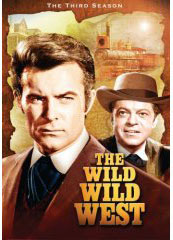
I've seen the term "Steampunk" lately, referring to a form of fiction. It is a sub-genre of science fiction or fantasy that is generally set in a Victorian time period - the industrial 19th century - where anachronistic technology of the time (such as steam power) is adapted in ways more common to our modern time, and alternate histories are often presented. Think of H.G. Wells' The Time Machine, or the futuristic gadgets used in the TV series Wild, Wild West.
"Steampunk" is derived from the term "cyberpunk", which refers to noir-like technology in a near-future world. The steampunk genre emerged in the 1990's, and has inspired enthusiastic subcultures in art, design, and fashion.

William Gibson and Bruce Sterling's 1990 novel The Difference Engine is often credited with bringing widespread awareness of steampunk to readers. Seattle author Cherie Priest's Civil War-era novels Boneshaker and Dreadnought - part of her zombie-infested, alternate-history Clockwork Century series - are other examples of the genre.