Monday, June 15, 2026

Formatting Internal Dialog

Copyright © 2026, Steven E. Houchin. All rights reserved.

My writer's critique group fell into a debate about the proper formating style for a character's unspoken thoughts, or internal dialog. Some simply wrote them in first-person as a continuation of the narration, with no delineation between the two. Some just added the tag "she thought." The subject came up because, in my manuscript, a character's thoughts are italicized. They wanted to know why I did it that way. My only answer was, "That's how I see it done in books I read." That wasn't a satisfying answer for them, so I did some research.

My first resource was my trusty Chat AI that I use to critique some of my sentence phrasing. In fact, it indirectly answered the questiion before I even asked. I offered it a paragraph to critique, which included one sentence of italicized internal dialog. When I pasted the text for it to evaluate, the italics were lost. But when it regurgitated its critique, it restored the italics! So I had to ask, why? It's response: "Italics are the standard, cleanest, most widely accepted way to format a character’s unspoken first‑person thoughts in modern fiction." Okay, so that's it. Good. But then, it also added: "But there are nuances ...."

Oh, great. The old, "on the one hand ... but then on the other hand ..." dodge. It categorized two kinds of internal dialog.
  1. Direct, first‑person style - Italicize this. It's what I used: switching from third-person narration to first-person internal dialog to give the thoughts immediacy. For example: I'll be back soon enough.
  2. Free, indirect style - No italics. I use this sometimes, too, when the thoughts aren't intended to be so emphatic, but instead should flow smoothly in the narration. The thoughts remain in the narrator's third-person voice. For example: He would be back soon enough.
Reading other online sources, I see the same rules shown above. But there are other acceptable styles. For third-person POV, the "she thought" tag can be used, with the actual thought either italicized or not. But without italics, the tag must be there. For first-person POV, it's the same, but with "I thought" as the tag. The exception for this POV seems to be that it can be non-italicized and without a tag, free flowing from the narration to thoughts. I suppose that makes some sense, since first-person narration is a bit like one long thought about everything the character sees, hears, and feels.

One rule that does seem set in concrete: internal dialog is never enclosed in quotation marks. It's just too easy to mistake for the spoken word.

From what I gather, my critique-mates aren't about to change their style based upon anything I say. And I don't know if this formatting issue earns demerits in the eyes of agents, editors, or contest judges when a manuscript is evaluated.

Friday, August 11, 2023

A Tale of Two Genres (Part I)

Copyright © 2023, Steven E. Houchin. All rights reserved.

My last two novels have been mysteries, set around the year 1940. The last one centered on a hard-nosed, sarcastic gumshoe with a bunch of characters who said, "ain't," "anyways," and "we was," while grousing about broads and dames. My writer's mindset has been firmly immersed in that era and its lingo. In polite modern company, I've had to be careful not to slip into my noir characters' language patterns, lest I offend.

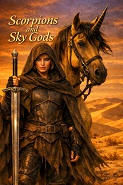
So, with that in mind, I just recently decided to try my hand at some futuristic sci-fi fantasy. Why? Well, a protagonist character and the skeleton of a story have been rattling around in my head (the writer's curse, I suppose) and it was time to let it out to roam free throughout my word processor. But, dear reader, you can imagine my linguistic predicament. The setting is not the mean streets of some gritty, pre-war city. The characters aren't half-educated violent mobsetrs, or dim-witted dames. No, the setting is a desert on a far away planet, filled with warriors, nomads, satraps, and evil wizards.

Thus I find myself doing the genre-switch two-step. The aliens do not speak in contractions. I suppose they'll have some form of sarcasm, but maybe it'll turn out sounding like Mork from Ork, instead of Jim Rockford. I've only written two chapters so far, but I find myself wondering if the dialog is stilted, rather than extraterrestrial.

My critique group mates are amazed after they hear my work read aloud. This just isn't something I write! The reviews have been positive so far. But as I write, the language usage is just so ... so ... alien.

Tuesday, June 9, 2020

Surprise versus Suspense, and Withholding Information

Copyright © 2020, Steven E. Houchin. All rights reserved.

As I mentioned in my last couple of blog postings, I've watched several excellent online lectures on fiction writing while on virus lockdown. One involved the complexity of plotting, which introduced a particularly intriguing concept: the contrast between surprise and suspense in a story's plot.

First of all, the instructor discussed the definition of plot versus story. A story is a series of events linked by a chronology. Told that way, the reader is led to ask, "And then …?" A plot is how a story is structured. Its events are linked by cause and effect, and are not necessarily chronological. The reader may then ask, "Why?"
In fiction, a fundamental principle of plotting is the withholding of information. At the beginning, you want the reader to know very little. At the end, the reader should know everything. In essence, the ending is withheld from the reader.

As the plot unfolds, withholding is used throughout so the reader keeps reading. The question to consider: what is withheld from whom? This is where surprise versus suspense comes in.

Surprise


In certain works of fiction, details are withheld from the reader in the beginning, and revealed bit by bit as the plot unfolds. In literary fiction, it's often details of the main character's life that are vague at first, but become clearer as the story progresses. In a mystery, the crime it known right away, with the possibilities of "whodunnit" slowly revealed. In these situations, withholding information from the reader is intended to result in the classic surprise ending, where the reader finally knows everything.

Suspense


For other works of fiction, the author tells the reader everything that is going on, but withholds details from the main characters. The reader knows the terrorist is building a bomb, then is told the target is a world leader, then is told where and when. The reader also knows the government intelligence agent has clues about the terrorist, who then figures out there's a bomb, then figures out the target, then where and when. The plot is like a slow-motion chase, where the antagonists spiral closer to an inevitable (and often predictable) confrontation. This sort of plot - with the reader knowing all, but the characters wandering in the dark and unaware of each other - is intended to create a feeling of suspense throughout the story. The reader is mostly along for the ride, with an omniscient view of everyone's movements.

So, the contrast between a story intended to surprise, versus one intended for suspense, depends upon who has been denied the crucial information. It's the reader versus the characters.

Tuesday, May 19, 2020

The Five W's of Fiction Writing

Copyright © 2020, Steven E. Houchin. All rights reserved.

In a video course on fiction writing I recently viewed, one episode was all about how to get started with a new story.

One technique it discussed comes from journalism, which the instructor called the Five W's of fiction. To get started, you'll need to think through each of these.

  1. WHO - Decide who are the main characters. Decide who is the narrator, or if many narrators are used.
  2. WHAT - What is the story about, overall? Does it have a theme? What happens in the story, as in a sequence of events? What is the desired effect on the reader? For example, to surprise, teach a moral lesson, cause an epiphany of some kind?
  3. WHERE - What is the setting? How important is it? Is it tied to a time and place? Sometimes the setting itself can be like a character. It may be crucial to the story, such as with historical fiction. It can set a mood. Or, it may be relatively unimportant.
  4. WHEN - When in history does it take place? When in the lifetime of the main character? Is the narrator past or present tense? How is the story told: from start to end chronologically, backward from the end, from middle with flashbacks?
  5. WHY - Why do characters do what they do? What does each character want? What is their motivation or causation for what they do?


The instructor also discussed the idea of outlining your story. This involves writing, in advance, a plot-point by plot-point summary of how the story unfolds. While it can be incredibly useful, many successful authors don't do it at all. Others make highly detailed outlines before writing the first word of the story. An outline can provide consistent forward momentum to the writing process. However, it can also stifle the suprise element of writing. Often, without knowing where the story is going, new characters suddenly appear, or the plot veers in an unexpected directon that wouldn't have occurred while outlining. Ultimately, the writer must decide on a case by case basis whether an outline works for her or not.

The instructor mentioned the concept of In Medias Res. It is Latin for "in the midst of things." In the case of literature, it means the story starts in the middle and is told forward from there with flashbacks to fill in what happened before. This relates to the "When" of the Five W's above, and is a common technique allowing the author to open the story with a climactic incident, and fill in the details afterward.

Overall, the course and the instructor are excellent, in my opinion.  At 24 episodes, it is well worth the investment.

Thursday, May 7, 2020

Characters, Flat Or Round, Oh My!

Copyright © 2020, Steven E. Houchin. All rights reserved.

I recently viewed a video course on fiction writing, and was fascinated by a concept regarding characters in a story: Flat characters vs Round characters. The idea comes from E.M. Forster in his 1927 book Aspects of the Novel.

First, all characters fulfill a purpose. Any minor character has, in theory, the potential to be a major character if the story is told from a different perspective. But Flat versus Round goes beyond major versus minor.

Flat Characters


Flat characters are often humorous or caricatures with just one distinguishing purpose or attribute. They are simple, predictable and vivid. They're easily recognized when they appear on stage or in the scene. But, Flats are not the same as a minor character; they can be quite important to the story.

The description of a Flat may be simple, such as, "he was a mean drunk." That character, when on stage, always predictably behaves in that way.

Sitcom characters are often Flats. For example, Cosmo Kramer in the TV show Seinfeld. His character predictably bursts into Jerry's apartment and makes some outrageous announcement, or performs some comical pratfall. Another example is Sherlock Holmes, who is, of course, a main character. But he is always predictable. What he wants is simply to solve the mystery and bask in the glow of his genius in doing so.

Round Characters


Round characters are capable of surprising in a convincing way. They are more mysterious and unpredictable. They can surprise, delight and disappoint the reader. But, any surprising outcome from them must be seen by the reader, when it occurs, as inevitable, and thus convincing.  The kindly Sister of the Blessed Poor won't be convincing if she suddenly grabs a knife and goes on a killing spree, unless a copious amount of psychological setup has been done beforehand.

A Round had the potential to change during the story, even if they miss that opportunity and fail to change. A Round can be defined by their psychology or by their circumstance.

Summary


All characters want something, and have something at stake. Flats want just one thing. Rounds are conflicted about what they want.

Wednesday, November 20, 2019

Book Review: We Have Overcome: An Immigrant's Letter to the American People

Copyright © 2019, Steven E. Houchin. All rights reserved.

In "We have Overcome ...", the author, Dr. Jason D. Hill, has written a truly inspiring and poetic story of his journey as an immigrant from Jamaica to America, and his struggle with the "progressives" among us who despise him for refusing to be categorized as a helpless minority victim of a racist nation. In many ways, his experience is a celebration of America's inclusive Conservative values where race is of little importance compared to human character and brotherhood.

Growing up in Jamaica, Hill longed to come to America to take advantage of the boundless opportunities offered by our country.  He refers to it as The Dream.  As a young man, he settled in a predominantly white section of suburban Atlanta. He worked hard at relatively low-level jobs that required little skill so as to save money to attend college. He hoped to study philosophy and poetry. In his Atlanta neighborhood, he found that the people (mostly Conservative) accepted him for who he was and were supportive of his ambitions.

Later in life, in Progressive academia, he met with dogged resistance.  Hill believed in moral virtues, hard work, and had a love for freedom and free enterprise, seeing that as the route to success.  His Progressive colleagues could not understand why he did not regard America as a land of racism and oppression, where he was doomed to fail without the affirmative action set asides of the state.  They simply refused to recognize him as a free man in control of his own destiny, one who did not need to be "emancipated" by their militancy.  His attitudes as a free thinker even led to attempts to have him fired from his academic positions, even though he had become a successful author and international speaker.

What he realized was the Progressive Left needed him to be a suffering, oppressed person of color so they (especially white Progressives) could use him (and others) to work out their own racial guilt so as to achieve some sort of personal moral redemption.  Others (people of color) saw him as a threat to their own racial militancy.  How could it be that he, Hill, could hold to Conservative values, and be free and successful?  But what Dr. Hill understood, and which befuddled the Progressives, was that Conservatives simply accepted him for who he was (a free man) and did not try to stand in his way.

In the book, Dr. Hill details similar stories of other immigrants who led their lives in pursuit of The Dream, to live free and be left alone to seek their own happiness.

My only criticism of Dr. Hill's book is his use of many $100 academic words and phrases that make some of the chapters unnecessarily verbose.  But, I suppose that's inevitable from someone who has spent years in academia. That aside, this is a remarkable book that details not only the author's love of America and its opportunities for all, but also the divisive racial impediments erected by Progressives in pursuit of their own agenda of identity politics.

Monday, September 23, 2019

Book Review: Outliers

Copyright © 2019, Steven E. Houchin. All rights reserved.

Outliers, The Story of Success, by Malcolm Gladwell, is a fascinating collection of stories about people and the factors behind their success or failure. Its basic premise is that most people succeed because of a series of circumstances that put them in the right place at the right time with the right support system.

It begins by discussing the people of the remote village of Roseto, PA, and their extraordinary healthiness. They tended to die of old age, rather than ravaged by the diseases that plague the rest of us. When studied, the researchers concluded that the sense of community amongst them - transferred from the Old Country in Italy - created an amazing wellness. No diet, or exercise, or anything else could explain it.

Later, Gladwell discusses the idea that those who succeed have had the opportunity to practice their passion, and poses that 10,000 hours of practice is a threshold at which success can happen. He gives an example of how The Beatles were given an opportunity to play in Hamburg, Germany, and were expected to perform 8 hours per day, versus other bands back home who were lucky to play a 1 hour set. Also, the example of Bill Gates who, as a high school student in the 1970s, had access to a computer at school and the University of Washington where he could write programs for hours each day, when others had no access to computers at all. The result was thousands of hours of practice, all because a fortuitous opportunity came his way.

In another study, the author discusses plane crashes, and a string of Korean Air crashes that seemed inexplicable. The result of the study was that, in cultures where challenging one's superiors is taboo, a co-pilot or other cockpit crew member was unwilling to speak up if the plane captain was making a mistake. This behavior turns out to be the cause of a large percentage of crashes. It is an example of one's culture leading to success or failure. In another example, Gladwell explains rice-growing in East Asia, which requires a 360-day work year, leading to a culture of hard work and persistence (versus other forms of agriculture with spring planting, autumn harvesting, and relative idleness in between). The rice culture has thus led to Asian's education and professional success in modern times.

This book provides fascinating insight into human behavior and how place, culture, and circumstance play a huge role in the outcomes. It is well worth reading and may help any individuals understand how they got where they are, for better or worse.