Sunday, July 12, 2015

Literary Agents and the Police

Copyright © 2015, Steven E. Houchin. All rights reserved.

Some writer friends told me about a panel of literary agents they'd heard at a local writer's conference. They moderated an open critique session, where the panel read snippets of attendees' work and offered their quick opinion. Some readings were the opening pages of novels, some were drafts of agent query letters, some were story ideas. The agents were reported to be rude, insulting, and dismissive of the authors' works, offering little in the way of constructive advice or encouragement. In other words, they acted like insensitive snobs bent on crushing the budding authors' dreams.

This all happened about the time of the Baltimore riots, where police were accused of causing the death of an arrested suspect due to negligence or worse. It all got me thinking about group behavior of those in power over others.

Our police have a difficult job, to say the least. Every day, they encounter many of the worst sorts in our society: drug dealers, violent gangs, thieves and burglars, rapists, wife beaters, murderers, liars and cheats. They face disrespect, resisting arrest, fleeing suspects, and numerous false cries of racism and brutality. Every day. On and on. They are human, and the daily dose of inhumanity and crime takes its toll until some, it seems, become jaded and insensitive to the people they encounter on the job. They may become gruff, short-tempered, and too quick to use force. And so the innocent may feel a bit roughed-up, leading to resentment and claims of brutality.

Enter the literary agents. A bit analogous to the police, they, too, are deluged each day with many of the worst sorts in the literary world: inane story ideas, amateurish query letters, sloppy chapter submissions, ignored submission rules, endless cat stories, authors making pitches over the bathroom urinals, and just plain bad writing. Day after day. On and on. So do they, too, become jaded and insensitive, expecting every new submission to be mindless crap? Do they have a knee-jerk reaction at writers' conferences that, of course, everything they hear is worthy of derision, no matter how much it hurts?

Just wondering.

Tuesday, June 23, 2015

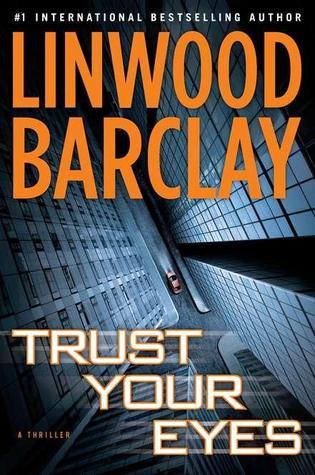
Book Review: Trust Your Eyes

Copyright © 2015, Steven E. Houchin. All rights reserved.

Author Lynwood Barclay's 2012 thriller Trust Your Eyes begins where any thriller or mystery should, with what we writers call "the inciting incident."  In this case, mildly schizophrenic Thomas Kilbride believes he sees a murder online.

Thomas is obsessed with maps. The walls of his room and the hallway outside are papered with them. He believes some cataclysm will wipe out all online maps, and he'll be the only one left with paper ones. He discovers a web site named Whirl360 (a thinly veiled reference to Google Street View) that allows him to "walk" streets around the world.  So, he spends all day in his room web-walking Whirl360's streets to memorize everything he sees, which he has the brilliance to do.

Trust Your Eyes image
One day, while web-walking a street in New York City, he looks up at an apartment building window and sees a person's head. A plastic bag is squeezed tightly over it.  A murder in progress, frozen in time by Whirl360's drive-by camera.  Thomas convinces his skeptical brother, Ray, to travel to New York City to investigate.  Ray discovers nothing unusual. The apartment is empty and he's told the girls who lived there have moved away.  He does nothing to dig deeper, but his arrival asking questions is noticed by the wrong people - those who ordered the murder.

The murder is orchestrated by Howard Talliman, the campaign strategist of an ambitious politician, to cover up previous dirty deeds by the politician, who plans to run for governor. Ray's snooping leads Howard's henchman to the picture in Whirl360.  Stunned by what they see, they decide the image must be scrubbed out. He sends a hit woman to the Whirl360 headquarters, who then forces the engineer in charge to wipe the image of the head from the picture before killing him and his wife.

When the head image suddenly disappears from Whirl360, Ray is convinced Thomas was right. It was a murder, and someone made the change just after his visit to New York.

As the story progresses, Howard's henchman tries to find Ray's identity, while at the same time Ray, Thomas, and a friend attempt to discover all they can about the murder so they can take a convincing story to the police.  The tension grows as Howard's operatives discover Ray's whereabouts and set out to eliminate them as loose ends.

Trust Your Eyes keeps you engaged all along, and includes other subplots that entangle Ray as he and Thomas struggle with the murder mystery.

Thursday, June 26, 2014

Book Review: The Rescue Artist


Copyright © 2013, Steven E. Houchin. All rights reserved.

The subtitle of this nonfiction book (“A true story of art, thieves, and the hunt for a missing masterpiece”) doesn’t do justice to the rollicking, outrageous story that author Edward Dolnick tells inside its covers.

The story begins on the day of the opening of the 1994 Winter Olympics in Norway. Two men prop a ladder up against a first floor window of Norway’s National Gallery, bash in the window, and make off with an iconic painting: The Scream by Edvard Munch. The painting hangs only yards from the window, which contains ordinary glass that is easily shattered. The guard, snug in his basement bunker, assumes he’s hearing a false alarm. The theft is a national embarrassment for Norway, coinciding as it does with the Olympics. The police are stumped.

After that introduction, the book focuses on a man named Charley Hill, who is a detective with New Scotland Yard’s Art Squad. Charley’s specialty is undercover work, where he usually poses as a brash American looking to buy stolen art. He spends much of his time cultivating seedy underworld figures, aiming to gain their trust so they’ll confide in him any knowledge of where such stolen items may be. The author tells several hilarious and amazing stories about Charley’s exploits recovering various other stolen paintings, and the outrageous characters he assumes along the way.

Interspersed with Charley’s story are chapters about art theft in general. Some explain how thieves incorrectly assume there is an easy, ready market for the booty. They dream of finding a greedy, wealthy art lover who keeps a secret gallery hidden in the basement, filled with stolen items which will never again see the light of day. However, such shady buyers are mostly mythical, and thieves often find themselves stuck with a Rembrandt or Vermeer that merely collects dust, or which they trade to some other lowlife for drugs or to pay an old debt. Such was the case when the Mona Lisa was stolen in 1911. An Italian carpenter, who had previously worked at the Louvre, hid in a closet overnight, donned museum work clothes, and walked out with the painting tucked under his work smock.
A couple of years later, he was arrested in Florence when he clumsily tried to sell the painting to an art dealer. Other chapters focus on how little security accompanies priceless paintings where they hang, especially  the vulnerability of old English estates that are miles from any police and are filled with works by the masters.

Little by little, the author reels out how Charley Hill and the Art Squad became interested in the theft of The Scream, how they wriggled into Norway’s investigation, and the scheme they cooked up for Charley’s undercover persona to find and trap the thieves.

The Rescue Artist reads like a comical crime novel when relaying Charley’s exploits or detailing other thefts and their determined or bumbling perpetrators. The factual chapters about the business of art theft are a fascinating glimpse into a world most of us never consider. This book is a quick read that riveted me and provided more than a few laughs along the way.

Saturday, July 20, 2013

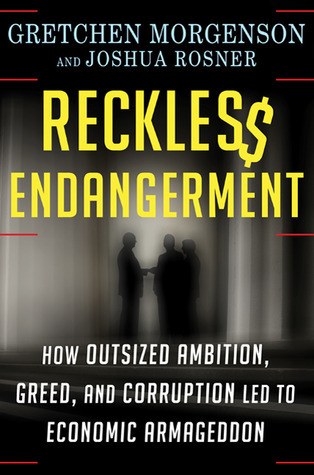
Book Review: Reckles$ Endangerment

Copyright © 2013, Steven E. Houchin. All rights reserved.

The financial crash of 2008 was a failure of professional integrity, political courage, and government policy. That is the takeaway message I received after reading Reckles$ Endangerment, a non-fiction work by Gretchen Morgenson, a Pulitzer Prize-winning business columnist for the New York Times, and Joshua Rosner, a financial adviser on housing and mortgage issues. Before reading the book, I had heard it said that anyone who read it “would never vote Democrat again.” Now I know why that is said.

The inciting incident that set into motion the 2008 calamity begain in 1994, when President Bill Clinton launched the National Partners in Homeownership program (referenced here as the Initiative), which sought to increase home ownership in America through a partnership among home builders, banks, realtors, Wall Street firms, and dozens of housing interest groups around the nation. Those targeted by the Initiative were primarily the poor, who would supposedly benefit by lower construction costs by builders and “creative financing” offered by lenders.

Ultimately, the push for creative financing had a corrosive effect on the mortgage industry as a whole. Many lenders viewed Clinton’s Initiative as permission to lower lending standards to reckless levels, and saw an opportunity to become wealthy along the way by significantly increasing the volume of mortgages pumped through their firms.

James Johnson was one of those who saw an opportunity for amassing wealth via the Initiative. He gained experience with the workings of Washington as an advisor to Vice President Walter Mondale and other prominent Democrats. He was appointed to an executive position at Fannie Mae in 1990, and soon became its chairman. Seizing upon the Initiative, he refocued Fannie Mae to lower lending standards while at the same time increasing profits to justify huge executive bonuses.

Fannie Mae is a quasi-government corporation that buys mortgages from lenders and repackages them into an investment instrument called a Mortgage-Backed Security. As the largest firm doing this, Fannie Mae historically set lending standards for the industry. These securities pay interest and are backed by the taxpayer. Banks, brokerages, pension funds, and others made large purchases of these securities as other fixed-income interest rates fell in the late 1990s and early 2000s. With the arrival of James Johnson as chairman, the book describes how Fannie’s lending standards were reduced, using Clinton’s Initiative as the excuse. That action rippled through the mortgage industry, creating a culture of recklessness that resulted in completely unqualified home buyers obtaining loans they could never pay.

Seeing the profits flow into Fannie Mae, Wall Street firms jumped into the Mortgage-Backed Securities business with a seemingly insatiable appetite for buying loans to repackage and sell. In their case, however, taxpayer guarantees were not available, so they turned to AIG (American International Group), a giant insurance company, who sold to these Wall Street firms something called a Credit Default Swap for mortgages - an instrument that was neither an insurance policy nor an investment - that would supposedly pay if the loan went into default. In any case, AIG kept few cash reserves on hand to pay out claims. After all, real estate was not considered a risk. In fact, the prominent credit ratings firms considered Mortgage-Backed Securities so safe they received a better than AAA rating - the best of the best.

Of course, the politicians don’t escape blame in this saga. Chief among them - but hardly alone - was Congressman Barney Frank (MA) who served as the ranking Democrat on the house Banking Committee. He, along with most other Democrats and a few Republicans, were staunch defenders of Fannie Mae’s risky lending practices, partly to support Clinton’s Initiative, but also due to Johnson’s skillful lobbying efforts. All attempts by regulators and the Bush Administration to sound the alarm were rebuffed. Interestingly, the Republicans, and especially the much-maligned President Bush, are mentioned very little in the book; the disastrous policies that led to the Initiative - and those who supported it politically - were mostly Democrats.

Reckles$ Endangerment goes on to detail the various shady operators that infested the mortgage industry as the Initiative firmly took root. It also names politicians who repeatedly issued denials that a financial crisis was building as the housing bubble grew. The Federal Reserve’s role is also examined, where they kept interest rates excessively low in the wake of the post-9/11 recession, even after economic recovery had occurred. Morgenson and Rosner’s writing style makes the book a compelling read, and the financial jargon is not too heavy that it can’t be digested. Anyone who wants to know the real facts of how all that Wall Street greed came about should definitely read this book.

It's Real Life, For Once - Part III

Copyright © 2013, Steven E. Houchin. All rights reserved.

Shame on me for not following up my last posting on this subject from July 2011, where I teased about my real-life story of a letter I wrote in 1962 while in kindergarten. The letter, addressed in my child's scrawl, was returned to me by a cousin unopened in the spring of 2011. The story of its journey and what it contained was published by a local newspaper in the fall of 2011.

To finish the story here: I held onto the letter for several weeks without opening it, until I had the chance to get together with my sisters and we could all share in the surprise of what it contained. The postmark gave a small clue: October 31, 1962 - Halloween. What in the world had I sent my grandmother for Halloween?
While gathered around a table in a restaurant with my family, I carefully slit open the envelope with my pocket knife and pulled out a single sheet of paper that had been folded over twice. Unfolding it revealed a crayon drawing of a pumpkin with my name written at the top! As best I can guess, it was that day's kindergarten assignment, and my mother must have suggested we send it to her mother, who lived in a rural town about 30 miles away. Why grandma never opened it, yet saved it all those years is a mystery I'll never be able to solve.

Tuesday, January 29, 2013

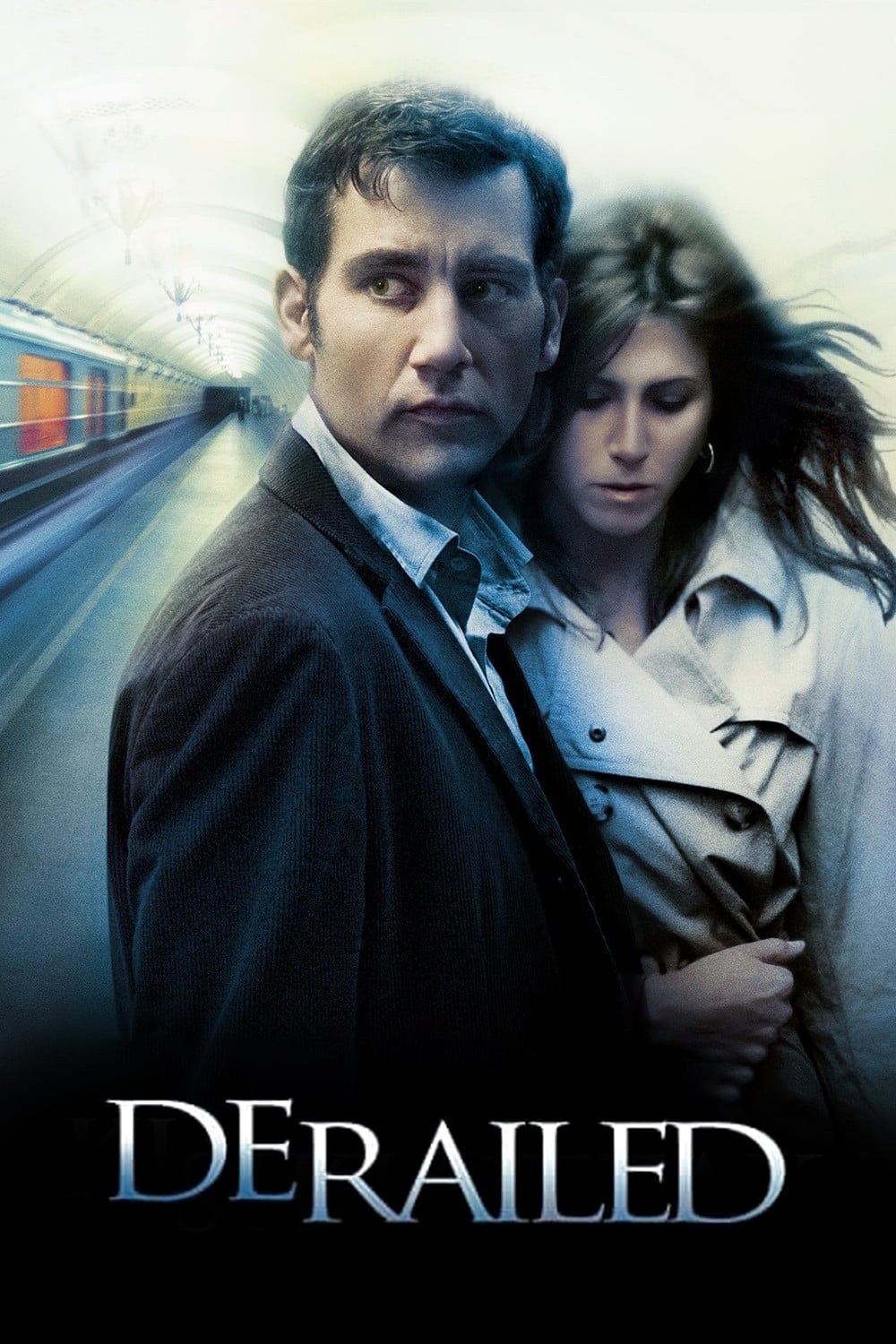
Great Movie Plot: "Derailed"

Copyright © 2013, Steven E. Houchin. All rights reserved.

I saw a great thriller the other day: the 2005 movie Derailed, directed by Mikael Håfström. So many movies that bill themselves as thrillers disappoint, with predictable and overused plots -- or violence and special-effects masquerading as a plot -- and characters that are a bit too heroic for ordinary mortals. Derailed thankfully avoids that.

Really great mystery/thrillers fool the reader into thinking they know what's coming next. The protagonist starts out as an innocent Joe who is sucked into violent or dangerous circumstances beyond anything he's encountered before. As the story progresses his life is thrown into turmoil. But little by little, he becomes hardened and more savvy. He learns to fight back. And there's a plot twist.

In Derailed, Charles, a married man with a chronically ill daughter, meets a sexy woman named Lucinda (Jennifer Anniston) on a commuter train. Within a few days, their innocent encounters go further, drawing them to a cheap downtown hotel room. But as they are about to consummate their adulterous act, a thug bursts into the room to rob them. Charles is beaten into unconsciousness and the woman is raped. Later, she refuses to allow Charles to call the police; her husband will divorce her and take away the children.

But, the criminal isn't done with them: he has their wallets and knows where they live. He demands money. Charles pays, thinking that will end it, while desperately trying to conceal the affair from his wife. But the harassing calls keep coming, as do the demands for more blackmail money. He takes Lucinda hostage, demanding $100,000. Charles feels guilty that Lucinda was raped, and will pay anything to protect her.

Charles enlists the help of an ex-con he knows, who works in the company mail room. The ex-con's plan is to frighten the blackmailer with a gun when the money is to be paid. Instead, he is murdered while in the car with Charles. Charles escapes, but the police are now investigating the murder and question him.

As the story nears the end, we discover the robbery and blackmail are not what they seem. Charles becomes suspicious when Lucinda vanishes, and finds she didn't have the high-powered job and family she claimed. He soon discovers she and the thug are a team of scam-artists, and Charles was their latest mark. He then hatches his own plan to trap them in their next scam.

The plot twist -- the scam -- comes as a total surprise because the viewer has invested so much sympathy in Lucinda. Charles' character is slowly transformed from a naive, frightened victim into a determined, cunning schemer bent on revenge. In the final scene, where the sneering thug has Charles right where he wants him, Charles turns the tables, and the thug realizes he's the one who has been set up, making for a thoroughly satisfying ending.

Friday, January 25, 2013

Book Review: The Chase, by Clive Cussler

Copyright © 2012, Steven E. Houchin. All rights reserved.

The Chase, written by Clive Cussler, is the first offering in his Issac Bell series. It is set in 1906, where Bell is an ace detective for the Van Dorn detective agency of Chicago.

The plot centers around a clever bank robber who murders all witnesses in the target bank, earning him the nickname Butcher Bandit. The crimes take place mostly in small western mining towns on the very day a large payroll lies in the vault. His escapes bewilder local authorities; he seems to vanish without a trace.

Issac Bell and the Van Dorn agency are called in to solve the case. Bell is independently wealthy, heir to a Boston banking dynasty, who foregoes the banking business to instead chase criminals for Joseph Van Dorn’s agency. Working from the Denver office, he assembles a small team of detectives and sends them off to the affected towns to scour for any information that may help. They gather a few sparse clues that eventually lead them to San Francisco, drawing them tantalizingly close to their villain.

The Chase contains many enjoyable historical details about towns in the West, the railroads, and the raunchy lifestyle of San Francisco. A few historical characters make cameo appearances, such as author Jack London. And, of course, the climax coincides with San Francisco’s 1906 earthquake.

The book begins and ends in April 1950, where a salvage crew attempts to raise a submerged train from Flathead Lake, Montana. As the 1906 plot unfolds, the reader is drawn closer and closer to the event in Montana that results in the sunken train.

The plot is excellent, pulling the reader forward from chapter to chapter. However, the writing itself is somewhat crude, especially Cussler’s annoying overuse of adverbs with dialog tags. Phrases like “she said sincerely” or “he said pessimistically” litter the pages by the dozens and dozens. Also, I found several obvious errors, such as using the wrong person’s name on dialog tags or in narration, leading me to believe this book was never professionally edited before publication. These flaws aside, The Chase is a good read for a lazy weekend.