Showing posts with label novel. Show all posts

Tuesday, June 23, 2015

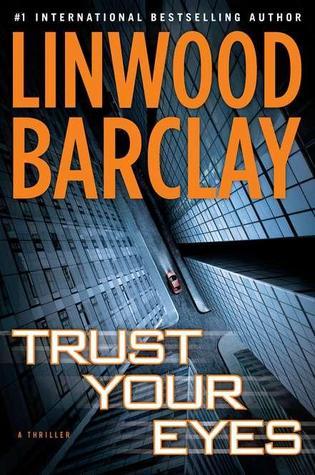
Book Review: Trust Your Eyes

Copyright © 2015, Steven E. Houchin. All rights reserved.

Author Lynwood Barclay's 2012 thriller Trust Your Eyes begins where any thriller or mystery should, with what we writers call "the inciting incident."  In this case, mildly schizophrenic Thomas Kilbride believes he sees a murder online.

Thomas is obsessed with maps. The walls of his room and the hallway outside are papered with them. He believes some cataclysm will wipe out all online maps, and he'll be the only one left with paper ones. He discovers a web site named Whirl360 (a thinly veiled reference to Google Street View) that allows him to "walk" streets around the world.  So, he spends all day in his room web-walking Whirl360's streets to memorize everything he sees, which he has the brilliance to do.

Trust Your Eyes image
One day, while web-walking a street in New York City, he looks up at an apartment building window and sees a person's head. A plastic bag is squeezed tightly over it.  A murder in progress, frozen in time by Whirl360's drive-by camera.  Thomas convinces his skeptical brother, Ray, to travel to New York City to investigate.  Ray discovers nothing unusual. The apartment is empty and he's told the girls who lived there have moved away.  He does nothing to dig deeper, but his arrival asking questions is noticed by the wrong people - those who ordered the murder.

The murder is orchestrated by Howard Talliman, the campaign strategist of an ambitious politician, to cover up previous dirty deeds by the politician, who plans to run for governor. Ray's snooping leads Howard's henchman to the picture in Whirl360.  Stunned by what they see, they decide the image must be scrubbed out. He sends a hit woman to the Whirl360 headquarters, who then forces the engineer in charge to wipe the image of the head from the picture before killing him and his wife.

When the head image suddenly disappears from Whirl360, Ray is convinced Thomas was right. It was a murder, and someone made the change just after his visit to New York.

As the story progresses, Howard's henchman tries to find Ray's identity, while at the same time Ray, Thomas, and a friend attempt to discover all they can about the murder so they can take a convincing story to the police.  The tension grows as Howard's operatives discover Ray's whereabouts and set out to eliminate them as loose ends.

Trust Your Eyes keeps you engaged all along, and includes other subplots that entangle Ray as he and Thomas struggle with the murder mystery.

Wednesday, April 11, 2012

Book Review: Rogue Island

Copyright © 2012, Steven E. Houchin. All rights reserved.

Rogue Island is a sarcastic alias used by Rhode Island locals; an affectionate reference to the state’s rampant corruption and mob influence. In Bruce DeSilva’s excellent crime novel, jaded Providence newspaper reporter Liam Mulligan is losing at love, is harassed by his soon-to-be ex-wife, and chafes at his boss’s mundane assignment to do feel-good stories about dogs.

But somebody is burning down buildings in the Mount Hope section of Providence where Mulligan grew up. People are killed - civilians and firefighters. Mullgan knows some of them. Despite his boss’s objections, he sets off on his own investigation, not trusting the city’s arson investigators, whom he publicly belittles as Dumb and Dumber.

As the number of fires mount, Mulligan begins to doubt they’re dealing with a classic pyromaniac, despite a much-touted FBI profile of the arsonist. The fires are confined to a specific rectangle of the neighborhood. And a few obscure real estate companies have been buying up properties in the same area. Homeowners who have been approached to sell are among the arsonist’s victims.

Rogue Island lays on a heavy dose of hard-bitten language and wisecracking dialog. Mulligan find himself on everyone’s bad side as he steps on plenty of toes to push his investigation forward. The cast of characters, the clues, and the action keep coming at a brisk pace, urging the reader to keep turning the page. At about 300 pages, it is a thoroughly enjoyable quick read.

Friday, June 17, 2011

Book Review: Bel Canto

Copyright © 2011, Steven E. Houchin. All rights reserved.

Ann Patchett's award-winning novel Bel Canto takes place in a Latin American nation, where attendees at a birthday party in the Vice President's mansion find themselves taken hostage by a rebel force.  The rebels plan to kidnap the President.  But he canceled his attendance at the last minute to stay home and watch his favorite TV soap opera.  The rebels aren't sure what to do, so they hold onto the most prominent men and the one woman at the party who matters: opera singer Roxane Coss, who was the party's entertainment.  Weeks go by.  Negotiations are stalled.  The rebels' strict regimen toward the hostages slackens, and life inside the mansion becomes a small, insular world of its own as hostages and some of the younger rebels bond.  Roxane Coss, deciding she must sing to keep her voice strong, practices her opera daily - delighting rebels and hostages alike.  Life outside the compound is nearly forgotten.  The standoff will never end, they think, so this is all there is.

The entire story takes place in the mansion.  As the story goes on, we see numerous characters contribute their own skills to the smooth operation of their new world.  A pianist.  A cook.  A translator.  The Vice President, who essentially becomes the housekeeper.  Many of the young rebels, who have lived only in the backwoods, learn about society and luxury they've never imagined before, such as watching TV for the first time.   One character, a multilingual Japanese translator named Gen, falls in love with Carmen, one of the young rebels.

Patchett does a masterful job of developing each character without dumping loads of backstory on the reader.  The reader feels sympathy for a General with the disease shingles, which causes an ugly, painful rash on his face. Or Cesar, who learns he can sing opera beautifully.  Or Carmen, who helps Roxane Coss arrange an amorous tryst with a Japanese businessman.  The reader begins to live vicariously in the little false world of the hostages, which is bound to come to a tragic end.

Patchett's language is lyrical, the descriptions rich and humorous at times.  She does not stick to any one character's point-of-view, but rather lets it flow from one person to the next, paragraph by paragraph - and makes it work.

If you long for a novel that explores complex situational character relationships, Bel Canto is worth your time.

Saturday, March 5, 2011

Book Review: The Treasure of Israel


Copyright © 2011, Steven E. Houchin. All rights reserved.

Where do I begin with S. J. Munson's novel, The Treasure of Israel? From the first pages, the words sloppy, amateurish came to mind. The formatting is jarring, almost as if the author's rough manuscript was dumped into a book-espresso machine and vomited out as-is. Blank lines separate paragraphs. Scene breaks are marked (or is it marred?) by multiple blank lines and gaggles of asterisks.  The use of dashes is seriously inconsistent (some long, some short). Was no editing done by the publisher, Revival Nation Publishing of Ontario? Well, considering their web site is defunct, it's hard to tell the quality of their products. One profile of them indicates they dedicate profits to Christian ministry work -- a laudable goal, but no excuse for a sloppy end product. Maybe it is strictly vanity publishing.

To say the novel's characters are thin is an insult to all thin characters ever created. To quote Admiral Nimitz (Henry Fonda) from the movie Midway when discussing Objective A-F: "Thin? Damn near invisible!"  The main character is Michael Grammaticus, not to be confused with his father from the opening chapter, Michael Grammaticus. The storyline has a poor man's Da Vinci Code feel to it, where a secret left behind by the deceased Michael Sr. propels Michael Jr. into danger and intrigue following clues among Rome's ancient churches. And we have, of course, the obligatory accidental female sidekick babe who latches on for the ride. The dialog among the characters usually consists of pointless arguments and dribbling banter that pretends to be clever but fails miserably.

The only interesting part for me were the flashbacks that detailed the history behind the treasures of the ancient temple of Israel. If those portions are true, then it represents a significant body of research.  But, who knows how much is just made up?

Dive into a good Clive Cussler novel instead.  The Treasure of Israel is definitly a book to skip.

Saturday, January 22, 2011

Beta Testing Your Novel

Copyright © 2011, Steven E. Houchin. All rights reserved.

When I'm not writing novels or short stories, I develop software to keep the lights on and the fridge stocked. A key stage of the software development cycle -- the steps taken to engineer a software product and release it to the world -- is "beta testing."

There comes a time when the development work is essentially finished, but the product is in a rough, largely untested form. The engineers have run it through rudimentary tests, and the quality assurance team has subjected it to some of their battery of standard tests. But, it is still imperfect. That's where beta testing comes in. You send a series of these rough versions to your best customers, who have bravely volunteered to be Guinea Pigs, with the understanding they will use it every day and ruthlessly report back on its bugs.

This concept is also valuable to writers -- especially for novels and non-fiction books. Once we have edited our first draft into a readable second draft, we are at the stage where we need honest, knowledgeable "beta readers." These are people you trust, who will dedicate themselves to read through your manuscript, cover to cover, without delay, and make detailed notes on its flaws and charms. I have been trying to find a few "right" beta readers for a long time, but as yet without success.

Family usually doesn't qualify because they will feel compelled to say nice things to you or, conversely, they still hold a grudge from when you were 11 years old and will rip your work apart just for sport. If they say, "It's great. I loved it," are they really cringing inside about how lame the story was and how it's better suited for insomniacs?

I've tried local librarians and booksellers, but they insist they and their staff are overwhelmed by required reading. Writer friends ought to make good beta readers because they have more knowledge of the mechanics of writing. But a writer whom you barely know, and who doesn't care if a friendship ever develops, may be the ideal beta reader. They have no axe to grind either way. They'll let the chips (and worn out clichés) fall where they may. And you should get the honest feedback you really need.

Tuesday, December 7, 2010

Steampunk Genre

Copyright © 2010, Steven E. Houchin

I've seen the term "Steampunk" lately, referring to a form of fiction. It is a sub-genre of science fiction or fantasy that is generally set in a Victorian time period - the industrial 19th century - where anachronistic technology of the time (such as steam power) is adapted in ways more common to our modern time, and alternate histories are often presented. Think of H.G. Wells' The Time Machine, or the futuristic gadgets used in the TV series Wild, Wild West.

"Steampunk" is derived from the term "cyberpunk", which refers to noir-like technology in a near-future world. The steampunk genre emerged in the 1990's, and has inspired enthusiastic subcultures in art, design, and fashion.

William Gibson and Bruce Sterling's 1990 novel The Difference Engine is often credited with bringing widespread awareness of steampunk to readers. Seattle author Cherie Priest's Civil War-era novels Boneshaker and Dreadnought - part of her zombie-infested, alternate-history Clockwork Century series - are other examples of the genre.

Book Review: Border Songs

Copyright © 2010, Steven E. Houchin

Jim Lynch’s Border Songs is a work of literary fiction set in the Blaine, Washington area along the USA/Canada border.  The main character is an unlikely Border Patrol agent named Brandon Vanderkool.  He stands out from everyone else at six-eight, and seems to have some sort of dyslexic problem that causes his speech to get mixed up when he is flustered.  Despite his size, he isn’t a tough-guy character; instead, he is uncomfortable with most social situations, and has a love for the area’s birds, which draws his attention away from his job.  He also has an artistic streak, often taking time out from his patrol duties to construct works of art from leaves or driftwood.  His walk is described as a “lope”, and his behavior is a source of amusement and wonder by everyone who knows him.

The border area is plagued by marijuana smuggling and illegal immigration. There are no border fences.  Much of the line between the two countries is simply a ditch, with Boundary Road spanning along the USA side, and Zero Avenue running parallel on the Canada side.  Some of the characters are dope smugglers, and the reader is taken inside their world of hidden indoor pot farms and hazy, drug-laced parties and business meetings.

Brandon’s father, Norm, struggles to keep his dairy farm afloat despite the aches and pains of age and his wife’s onset of Alzheimer’s.  Across the ditch in Canada are dozens of estates that overlook the USA side.  Immediately across from Norm, in a modest home, is his America-hating neighbor, Wayne Rousseau, who often incites political arguments across the ditch, just to irritate Norm.  Wayne’s daughter, Madeline, is up to her neck in the pot trade.  As the story goes on, we learn that Brandon is in love with her.  She regards his attempts to woo her with annoyance and worry because she fears the contact is related to his job as a border agent.  But, Brandon is oblivious to her involvement in the smuggling business.

Brandon’s love of nature leads him into remote areas where most border agents never venture.  This results in a number of spectacular, accidental arrests that only serve to increase his local celebrity.  But all he really wants to do is watch the birds and construct spontaneous works of art.

Brandon and the other characters are well developed, but the middle of the book drags; many of the chapters come across as character vignettes without a clear, consistent story line to pull the reader along.  I didn’t always feel the “Oooh, what’s gonna happen next?” impulse to turn the page.  But, I persisted, and the story picked up in the final one quarter of the book, leading to a thoroughly satisfying ending that has Brandon finally appreciated for who he really is.

Sunday, October 31, 2010

Another View of 'Show, Don't Tell'

Copyright © 2010, Steven E. Houchin

Recently, I attended the Pacific Northwest Writers Association (PNWA) monthly member meeting in Bellevue. The guest speaker was local book doctor Jason Black (http://www.plottopunctuation.com/), who gave an excellent presentation on the topic "Show, Don't Tell" Demystified.

He began his presentation by explaining that showing versus telling is a contrast between the meaningful and the mundane. It is acceptable, even necessary, to tell the things that are mundane in your story. For example, you can tell that your characters are meeting for dinner, because that is a mundane detail. You can tell where the characters are after a scene change - they're standing on the sidewalk outside the hotel. You can tell that a character turned on a lamp. But, for those things in a scene that are meaningful, it is better to try to show it. For example, instead of saying "Hubert felt affection for her", you would have Hubert come close and give her a tender hug.

Jason said that showing is the process of manifesting the invisible. The show should cause the reader to draw an inference from it, rather than telling the reader what to conclude. As an example, he displayed a photo of two smiling women at some sort of public event. What can be inferred from the photo? Their teeth were white and straight, thus they may come from an affluent background. They were leaning close, so they must be friends. People in the background wore identical plastic bracelets, so they may be at some paid event. In our written scenes, can we get the reader to draw an inference from what we show? Think about this scene:

Hubert's eyes followed the curvy woman as she sashayed across the restaurant. His wife griped her knife, white knuckled, and stabbed into her steak.

Is Hubert a philanderer? Is their marriage already on the rocks? Will the wife murder him in his sleep? Is the other woman a hooker?

When to show? To cause an inference, to draw attention, to evoke a feeling.

When to tell? At a scene break, jumps in time (i.e. "Three days later ."), to summarize mundane events ("They drove into town").

Jason gave these general steps for adding shows to your scenes during the editing process:
  1. Figure out the meaningful invisible facts in the scene. For example, A hates B, C fears dogs, D drinks too much. These are things you could tell the reader, but they have an invisible quality from the other characters' point of view, versus a lamp or a blue dress, which are obvious and visible.
  2. Find the moments in the scene where these invisible facts come into play.
  3. Determine the visible consequences/manifestations of the invisible facts. A always sneers at B, C cowers when dog approaches, D staggers with drink in hand.
  4. Write down these visible manifestations (the show).
    Other examples of tells:
    • Information dumps and backstory.
    • Some dialog tags, other than said and asked.
    • Adverbs, which tell a manner of action. Better to use stronger verbs.
    • Exclamation points in narration!
    Other things that show:
    • Dialog.
    • Inner monologue (i.e. POV character's first-person thoughts).

    Friday, October 8, 2010

    Book Review: Stein On Writing

    Copyright © 2010, Steven E. Houchin

    Stein On Writing book imageI recently finished reading Sol Stein’s book Stein On Writing. Its chapters are divided into seven sections, allowing the reader to zero in on the subjects he/she cares most about. Stein’s writing is straightforward and the chapters are peppered with excellent examples, both good and bad.

    I concentrated most on the Fiction section, where each chapter presents different concepts and techniques, such as Plotting, Characterization, Suspense, Tension, Dialog, and Point of View.

    I especially liked two of the chapters.

    A) The Crucible: A Key to Successful Plotting. This is the situation that binds the characters together even as things go terribly wrong. What is it that keeps them together until the end, rather than running away? It can be something like a marriage, a blood relationship, a closed physical location, a business, a competition, etc. The crucible can exist for one or more scenes, or may define the whole novel. When used, it can breed plenty of character conflict and be a device for the character to grow or change.

    B) The Adrenaline Pump: Creating Tension. The chapter starts with the great notion that “Writers are troublemakers”. Rather than seeking to relieve stress, we wish to give our readers the sense of more stress and pressure, like stretching a rubber band. He makes the point that, once the author creates the tension, he/she shouldn’t let go too quickly; let the stress linger - drag it out as long as possible. The tension can come from a single chilling sentence, or by setting up a stressful situation, such as a ticking clock to an ominous deadline.

    Stein’s book should be a valuable reference I can refer to again and again to get my novelist’s juices flowing anytime my writing feels stale.

    Wednesday, October 28, 2009

    Something From Nothing

    Copyright © 2009, Steven E. Houchin

    This summer, I thought I was well on my way to completing my third novel, Snowbound. I figured I ought get it done soon, seeing how it was chosen as a finalist in this year’s (2009) PNWA Literary Contest. But a funny thing happened on the way to the finish line: I didn’t have an ending, it was too short, and the middle didn’t have enough oomph (a technical term meaning giddyup). Other than that, it was a masterpiece. I desperately needed ideas to move it forward.

    My critique group grumbled when I arrived each week empty handed. “Just write!” they’d say. “It all comes out crap,” I responded truthfully, having suffered brutal critiques of obviously rotten prose the last few times. I was stuck. Drastic action was necessary. So, I formulated a bold and decisive plan: do nothing. Nothing! Put the damned thing away and wait. Let the story rattle around in my head for a few weeks, or even months if necessary. So, I did.

    For the next several weeks, mid-story plot scenarios played out in my mind, coming and going like bad TV sitcoms and stale leftovers. My exasperated critique group-mates threw out ideas. I felt pressure to keep writing. But it just felt ... wrong. So, the manuscript sat, forlorn and unloved - the lousy piece of #*!{%!~$">#$.

    But, doing nothing begat real inspiration. After a couple of months, a new plot idea bubbled up from the muck and said, “Look at me! Ain’t I pretty?” I thought it through and said, “Why, yes you are!” Once again, my manuscript was loved and adored as I pounded out the new story line into the middle of what existed before. The chapters flowed out and the story revved up as I added new action, suspense, bumbling, and shootouts (you simply must have shootouts).

    I still need an ending, but the ball is rolling again. Amazing how one can get something out of nothing.

    Wednesday, April 15, 2009

    Manuscript Formatting Tips

    Copyright © 2009, Steven E. Houchin

    Writers often encounter frustrating manuscript editing and formatting problems when using an editor such as MS Word. Sometimes I'll see the problems in their manuscript, or they come to me (a software engineer in my other life) and ask, “How the heck do I ...?” Below, I list some of those issues and a solution. I use Office 2000, so the directions apply to that. But newer versions have analogous features.

    Adding Headers and Page NumbersWhenever you pass your manuscript (or portions of it) to someone else to read, you should have title headers and page numbers on every page. In MS Word, this is done with the “Header and Footer” feature.

    Headers place text at the top of each page. Footers place text at the bottom of each page. In MS Word, they are created or modified by selecting “Header and Footer” under the View menu, which pops up a little toolbar. Usually, you will want to put your name and book title at the upper left. For my novel Double Fire, I have: Houchin/DOUBLE FIRE

    The page number is usually placed in the upper right, but some put it on the right in the Footer. [There is a button in the toolbar to switch between Header and Footer.] To put the page number on the right, press the Tab key in the Header until the cursor reaches the right-hand border, then press the “#” button in the toolbar. That will cause all your pages to be auto-numbered. When you’re done, press the toolbar’s Close button.

    However, you’ll want your manuscript to have a title page, but won’t want a header or a page number on it. So, how do you accomplish that?

    Go to your title page in the manuscript. Then, open the “Header and Footer” toolbar again, and press the little button that looks like an open book. The Page Setup screen opens. Check the “Different first page” box, then press OK. If you had any title page headers, they vanish! If you don’t have headers yet, you can now insert them on page 2.

    But, a problem remains: the page after the title page is numbered 2. You’ll want it to be page 1. To fix this, select the Insert menu, then open “Page Numbers…”. On the Page Numbers screen, choose the Position and Alignment for your numbers, and clear the “Show number on first page” box. Next, press “Format…”, select the “Start At:” option and type in 0 (zero) as your first page number. Finish by pressing OK. When you add your page numbers in the Header (or Footer), the page after the title will be number 1.

    Automatic Paragraph Indentation
    Editors expect to see the first line of each paragraph in your manuscript indented. I’ve noticed that many writers do this by simply typing a few spaces. However, MS Word provides for automatic indentation, which should provide consistent looking paragraphs.

    To enable this feature, open Word’s Format menu, then select Paragraph. Under its “Indents and Spacing” tab, look at the settings under “Indentation”. Select the “First line” value under the “Special” drop-list box. If you don’t like the default 1/2 inch indentation this provides, you can enter a different value in the “By” box.

    The “Left” and “Right” settings will indent the whole paragraph from the left or right margins. This might be useful if you’re inserting a quotation or poem within a story.

    Note that these settings apply only to the currently selected paragraphs (and any new one added immediately after). Unfortunately, to fix your manuscript, you must remove the spaces you manually inserted, highlight all paragraphs you wish to change, open the Paragraph menu, select the “First line” value, then click OK.

    Paragraph Spacing
    Have you run into the situation where blank lines appear in your manuscript between paragraphs? There they are, but you never intended to put them in; and they won’t go away.

    Well, here’s the problem. Open Word’s Format menu, then select Paragraph. Under its “Indents and Spacing” tab, look at the settings under “Spacing”. The “Before” and “After” values specify how much space to add before/after the paragraph. Zero means no space between. To fix your manuscript, you must highlight the space between all incorrect paragraphs, set these “Before” and “After” values to zero, then click OK. You must do this for each paragraph that is wrong.

    Unwanted Horizontal Lines
    Have you ever discovered that unwanted horizontal lines have magically appeared in your manuscript? Word may create these lines automatically in response to certain things you type, such as ‘***’. It assumes you really wanted to insert a horizontal line, so it does.

    First, you need to eliminate the lines that already pollute your manuscript. To do this, highlight a line of text before and after the horizontal line, then under the “Format” menu, select “Borders and Shading...”. In the pop-up window, select the “None” box and click OK. The line should go away. If you intended to insert a scene break here, replace the now-removed solid line with a blank line, then type the break characters WITHOUT PRESSING THE “ENTER” KEY AFTERWARD. You’ll need to do this for each unwanted solid line you find.

    To turn off this automatic line-insertion nonsense, open the “Tools” menu and select “AutoCorrect...”. In the pop-up window, choose the “AutoFormat As You Type” tab, then uncheck the “Borders” box under “Apply as you Type”. Then click OK. You’ll have to do this for every doc file you have. After this, typing asterisks for a scene break should not mess up.
    Monday, March 23, 2009

    "Conflict" - Love It Or Hate It?

    Copyright © 2009, Steven E. Houchin

    Every time I hear someone say, "I don't see any conflict in this scene", I want to strangle them. Ahhh, yes ... now there's conflict! To me, the "conflict" criticism always comes across as formulaic, like an item on a generic checklist: flawed protagonist, check; no clichés, check; no adverbs, check; conflict, check.

    I was at an author event recently where the subject of conflict came up, where it was said you must put "conflict on every page". Ugh - there it was again: the hated formula. But, as the discussion ensued - and some objections were raised - I realized that the "conflict" formula was really a misnomer. It doesn't mean that a fistfight or shouting match need break out on every page, which seems logical to qualify for conflict. Instead, it encompasses a lot of things we don't usually associate with conflict. I think the idea centers more around avoiding scenes that are nice, pleasant, pretty, and bland.

    I jotted down ideas that might suffice to portray conflict in a scene:

    Accident
    Flirtation
    Obstacle
    Adversity
    Foreboding
    Oppression
    Anger
    Grief
    Pursuit
    Anxiety
    Hate
    Rage
    Attack
    Indecision
    Revenge
    Bewilderment
    Injury
    Reversal
    Bumbling
    Insecurity
    Slapstick
    Denial
    Madness
    Stress
    Disappointment
    Miscue
    Teasing
    Disbelief
    Mistake
    Tension
    Exhaustion
    Misunderstanding
    Fear
    Mystery

    Looking through these ideas, I can see things that represent inner turmoil (denial), or an external force (attack). It can be shown through inner dialog, external dialog, body language, or action. Nods and smiles, sitting around, and mundane chitchat ("Hi, how are you?") are the enemy of conflict. Still, I don't like the term "conflict" for this concept. I think "tension" or "stress" works better for me.

    Now, if I hear "conflict" one more time, I might just . . . just . . . . Well, you get the idea.

    Sunday, June 1, 2008

    Fun With Numbers; To Hyphen Or Not To Hyphen

    Copyright © 2008, Steven E. Houchin
    ( Originally written 14 April 2008 )

    I tend to spell out most numbers in my novels (the main exception being dollars and cents). There are definite, but sometimes conflicting, rules for how to spell out numbers in a manuscript. There are several web sites that attempt to deal with this subject. One is Tina Blue's Grammar and Usage for the Non-Expert. Another is at edufind.com.

    I'll try to summarize some of the points here.

    1. Hyphenate compound numbers from 21 through 99. For example: sixty-five, thirty-one. But, larger numbers aren't hyphenated: one hundred fifty-six (not one-hundred-fifty-six).

    2. Hyphenate fractions. For example: three-fifths, one-tenth. But, there are exceptions. If there is already a hyphen present in either the numerator or denominator, no other hyphen is added. For example: twenty-five thirty-eighths (not twenty-five-thirty-eighths). Also, no hyphen is used when the fraction is used as a noun: They were scoreless after three quarters.

    3. Hyphenate numbers when joined with a unit of measurement to form an adjective. For example: twenty-five-minute walk, thirty-six-year-old man, fifty-yard pass, seventeenth-century historian. This rule also holds true when using digits: 25-minute walk. But, when not used as an adjective, the joining hyphen is not used, as in: walked twenty-five minutes (not twenty-five-minutes), passed fifty yards (not fifty-yards).

    Clearly, describing these rules is quite complicated, but if we write numbers this way, it is a subject we need to understand.

    Monday, April 14, 2008

    Murderous Prose

    Copyright © 2008, Steven E. Houchin

    It seems I just can't get enough of author Raymond Chandler (1888-1959). His portrayal of the hard-bitten, working class Private Dick may only be matched by his contemporary, Dashiell Hammett, with his starring ace detective Sam Spade.

    Chandler is famous for his gritty detective protagonist Philip Marlowe, who prowls the streets and environs of 1930's and 1940's Los Angeles, richly transporting the reader headlong into that era. Two of his most famous Marlowe novels, Farewell, My Lovely (1940) and The Big Sleep (1939), were also successful movies.

    I'm currently reading Chandler's The Simple Art of Murder (Vintage Books, 1988), which begins with an essay - often scathingly critical - on the state of the "detective story", and his disdain for its many practitioners. He says, "The average detective story is probably no worse than the average novel, but you never see the average novel. It doesn't get published." The remainder of the book is a series of - you guessed it - short detective stories.

    What amazes me most about Chandler is his stunning descriptive phrases. For example, his story Spanish Blood begins:

    "Big John Masters was large, fat and oily. He had sleek blue jowls and very thick fingers on which the knuckles were dimples."

    Or, the first paragraph of I'll Be Waiting:

    "... Carl, the night porter, turned down the last of three table lamps in the main lobby ... The blue carpet darkened a shade or two and the walls drew back into remoteness. The chairs filled with shadowy loungers. In the corners were memories like cobwebs."

    Wow!

    Monday, March 31, 2008

    Meet Your Perpetual Agent

    Copyright © 2008, Steven E. Houchin

    So, you’ve finally been published, but your agent has lost interest in you, or you’re not getting along. It’s time to find a new agent, someone you like, who is enthusiastic about your career potential. So, you terminate your old agency agreement. Your new agent can now aggressively move forward selling your book’s rights into new markets, right? Well ... maybe not. You may be hampered by “The Interminable Agency Clause”.

    An Interminable Agency Clause, also known as an “Interminable Rights Clause” or a “Perpetual Agency Clause”, essentially gives your old, unloved agent all rights to represent your book as long as the book’s copyright is in effect. That’s your lifetime plus 70 years - a very long time - and a big problem. Normally, the agent would only have rights during the life of a publishing contract. So, if your publisher drops your book, your new agent can’t re-sell it to a new publisher because your old agent has perpetual representation rights. Even if your old agent agrees to cede representation to your new agent, he can still demand commissions for any new sales.

    Many professional writers groups warn against this practice. Even if you love your agent, agencies that own the rights can change personnel or be sold, leaving you out in the cold with strangers.

    My main source for this is novelist Victoria Strauss’ blog entry at:
    http://accrispin.blogspot.com/2007/12/victoria-strauss-interminable-agency.html

    The Interminable Agency Clause: don’t let it happen to you!

    Wednesday, February 13, 2008

    I'm In a Blue, Blue Subjunctive Mood

    Copyright © 2007, Steven E. Houchin. All rights reserved.
    ( Originally written 13 December 2007 )


    I recently had my Linear Descent manuscript critiqued. A number of my sentences were marked for incorrect grammar. The problem involved use of the word “was” when “were” was the correct usage. I had descended into a bad subjunctive mood. Now, I must admit, I do often get moody, but I never realized my subjunctiveness was so out of whack.

    Usually, the use of these words is obvious. For example: “The clown was squeezed into the tiny car”, versus “The clowns were squeezed into the tiny car”. This is a singular versus plural past-tense usage, where the proper word to use must match the subject “clown(s)”. Although, I do sometimes have trouble with phrases that seem ambiguous, such as “The pair was up to no good”, versus “The pair were up to no good”. Hmmm....

    And then there are phrases that describe situations that depend on probability or likelihood, such as “If I was a rich man ...”. However, “was” is grammatically wrong. The correct phrase is “If I were a rich man...”, even though “I” is singular. Why?

    This is an example of a subjunctive clause. A verb is in the subjunctive mood when it expresses a condition which is doubtful or not factual. In this example, I am not really rich, so the verb “was” - normally the singular past tense of the verb “to be” - is really in subjunctive tense. In English, the subjunctive past-tense of “to be” is “were”, not “was”, and the plurality of the subject “I” is irrelevant. “If we were rich men...” uses the same word, even though the singular “I” has changed to the plural “we”. It is still subjunctive mood.

    So, as I slog through my latest manuscript looking for occurrences of this error, my mood quickly turns blue, blue, blue.

    Puzzled

    Copyright © 2007, Steven E. Houchin. All rights reserved.

    ( Originally written 11 November 2007 )

    Having nothing better to do one evening, I watched a television program on people who take part in an annual crossword puzzle competition. The speed with which these contestants whizzed through them was truly amazing. During the program, it showed bits and pieces of clever clues and their answers. Now, I’m not interested in expanding my small universe of skills to include competitive puzzle solver, but it got me thinking whether tackling the daily newspaper’s crossword puzzle might prove useful for a writer. As writers, we are constantly confronted with the need to find different ways to say the same thing in order to avoid word repetition. For many puzzle clues, this kind of thinking is exactly what is required. For example:
    • “Promised to give up” -- Swore Off
    • “With wisdom” -- Sagely
    • “Cast a spell over” -- Enchanted
    Beyond that, you can just plain learn new things you never knew before.
    • “Brine-cured cheeses” -- Fetas
    • “La Vie en Rose singer” -- Piaf
    • “City on the Rhone” -- Lyons
    So, if I were to do the crossword every day, would it make the words, phrases, and cultural references in my writing richer and more varied? Other than taking up a little bit of time (they get harder through the week), it seems as though it might. Who knows, it may even help with those frustrating moments when I get stuck, grasping for ideas on how to move the story forward. Putting on my hat as an engineer, though, I doubt there is any effective way to actually measure any benefit from doing this unless, of course, my story’s plot would turn nicely on some brine-cured cheeses.

    So, Ya Wanna Get Published?

    Copyright © 2007, Steven E. Houchin
    ( Originally written 6 December 2007 )

    Last month I heard new local author speak at Third Place Books. In addition to telling us about his novel, he spoke bitterly about the process of getting published. His experience was so frustrating that he stated he has no desire to write another book.

    After dozens and dozens of rejections, he put the book away for a few years. It was ultimately published due to a chance meeting with a book critic who spoke at the UW bookstore. The critic read his manuscript and put him in touch with someone he knew in the publishing business. Eventually, the author signed with a small, on-demand publisher who put out his book in paperback. “On-demand” means that the publisher can print his book in units of ones and twos if needed, rather than traditional publishers who must print thousands at a time. Getting published had taken five long years, which he was told is about average.

    With book in hand, he visited a local Barnes & Noble, ready with his best speech to convince them to stock his book. The B&N person turned to the inside back page and examined the bar code, then promptly told him they couldn’t accept it. The code contains an identifier that shows it was print-on-demand, and they have a corporate policy to not handle them. Same story with Borders. Why? Because they can’t return the unsold extras to on-demand publishers, who don’t carry inventory. So, to market his book, he can only count on independent bookstores and online sellers.

    I suppose this is something else we need to add to our list of Bewares for the industry.